Showing posts with label cremation. Show all posts

Tuesday, August 31, 2021

Cremation within 12 hours after death is the required cadaver disposal under Book XXI of Sanitation code and IATF guidelines


 Celebrate Life


Many are dying from covid19 in the 3rd wave.  The prescribed method for the disposal of the body is via cremation.   We should expect more cases for cremation

But this is not happening.  The DOH is unable to enforce because of the lack of facilities and the steep prices being charged by private crematorium companies.  

The funeral homes are demanding ridiculous low prices for cremation services they are brokering

Wednesday, October 31, 2018

Cremation service soon to be available at Holy Gardens Pangasinan and Greenhills

The #memorial experts

Bisitahin ang aming website.

www.holygardencremation.blogspot.com

                                                    New Life Techwin Diesel 1 Hour Cremation Machine

We are constructing in earnest (3 years in the making) the crematorium of Holy Gardens Pangasinan in San Carlos City,  and Holy Gardens Greenhills in Calamba.  The cremation machine of Pangasinan was delivered last October and the building is undergoing completion.  Pangasinan was promised to be completed in December. 

Cremation is on the way up 40% in MM and 51% abroad.  Why?  Because of economics.   It is cheap. It is fast, it is convenient. 

Paglilibing sa murang halaga:

At need cremation would be cheapest way to go... Our introductory price for direct cremation, at need  is only P20,000* with free marble urn.   Compare this with P50,000 or more in Catholic or municipal cemetery.  Or P100,000+ in a memorial park

This would generate more income and sales/livelihoood for:
1.  Urn makers
2.  Keepsakes
3.  Cremation jewelry

May mura ding offer for bone cremation, infant,  and social amelioration

Social amelioration packages

Kung approved ng mayor, vice mayor or DSWD, meron tayong murang body cremation for indigents:
                  Cremation                                   12,000*

                   Ash crypt Rental for 3 years        3,600

                        Total                                      15,600

                  Cremation                                   12,000

                   Ash crypt rental for 5 years         6,000

                                                                      P18,000


* subject to fuel surcharge, beyond P30.00/liter of diesel, and does not include urn

Prepaid cremation service available at  P4,000 annual zero interest

 Monthly for 60 months 0 interest no dp:    P420.00 only very affordable

                            INQUIRE NOW:     Holy Gardens Pangasinan    0956 391 2000

                                                             Holy Gardens Greenhills      0927 875 3000

Bentaje (advantages ng cremation)

1.  Mura  - 60% to 80% cheaper sa traditional na libing

2.  Convenient -  puwedeng ipadala, hatiin remains ng mahal sa buhay. Laging close sa iyo sa urn
     keepsakes, o cremation jewelry.  Hindi na kailangan ang magastos na pag uwi tuwing undas
     para alalahanin mahal sa buhay.  Araw araw kapiling ang loved ones.

3.  Malinis at eco friendly -  walang chloroform na hahalo sa water supply, walang kakalat na sakit
      walang mabahong amoy.

4.  Tipid sa lupa na dapat ginagamit sa pagsasaka at food production.  Sa Japan, Taiwan, Thailand,
      Korea, USA, cremation ang in. 


Wednesday, October 26, 2016

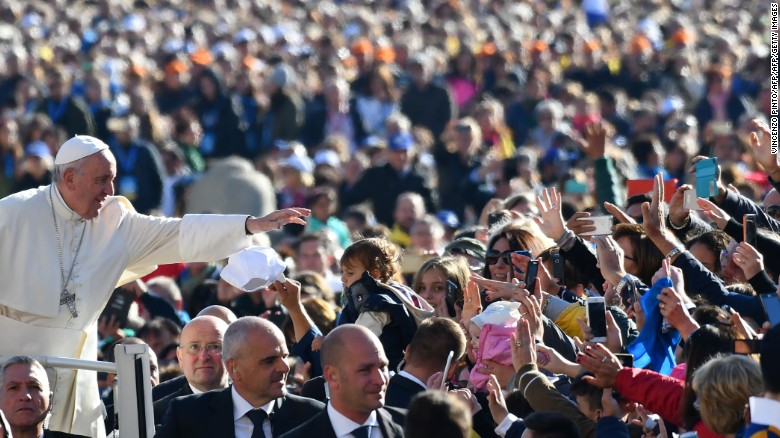
Vatican issues guidelines on cremated remains

The #memorial experts

From CNN News

Image result for Vatican issues rules on cremation

The Vatican has recently issued guidelines regarding the disposition of cremated remains:  they should not dispersed scattered at sea or nature, they should not be kept at home, or distributed among members of the family, shot into space or be made part of jewelry

The Vatican has maintained burial as the norm, but does not object to cremation since l963.

The Vatican holds the sacredness of the remains and the idea that when the resurrection of the dead comes, the remains of the dead are intact.

We have pending plans to put up two crematorium:   one in Pangasinan, the other one in Calamba. Wait for further announcement

Pope Francis greets the crowd in St. Peter's square.

Monday, February 15, 2016

Cremation in the Philippines

The #memorial experts

February 16, 2016


BE a BIDDA: "BELIEVE, INSPIRE, DREAM, DO ACHIEVE"

February 15, 2016
Cremation Room in the Philippines


Nanay Sion is now ashes

We will build crematorium in Pangasinan, La Union, Calamba and Morong as part of our Vision

The #memorial experts


BE a BIDDA: "BELIEVE, INSPIRE, DREAM, DO ACHIEVE"

February 15, 2016

Complete your education in cremation.  We are building 4 this year.  This is the future of memorialization/death industry:  cheap, growing, in demand, clean and sanitary


Cremation of human body


Modern day cremation Part 1


Process of modern day cremation Part 2


Cremation retort
Pasupatinah Cremation in Nepal

Thursday, June 27, 2013

Repost on Cremation by Holy Gardens Greenhills Memorial Park Chief - Cynthia

How do you like to be remembered?

Repost on Cremation from Report of Cynthia Cartago chief of Holy Gardens Greenhills


Religious views on cremation
Indian religions

Crematorium in Bangkok, ThailandCrematorium in Bangkok, Thailand
The Indian religions, such as Hinduism and Buddhism, mandate cremation. In these religions the body is seen as an instrument to carry the soul. As an example the Bhagavad Gita quotes "Just as old clothes are cast off and new ones taken, the soul leaves the body after the death to take a new one". Hence the dead body is not considered sacred since the soul has left the body. Hence, the cremation is regarded as ethical by the Eastern religions. In Sikhism, burial is not prohibited, although cremation is the preferred option for cultural reasons rather than religious.
According to Hindu traditions, the reasons for preference of destroying the corpse by fire over burying it into ground, is to induce a feeling of detachment into the freshly-disembodied spirit, which will be helpful to encourage it into passing to 'the other world' (the ultimate destination of the dead). This also explains the ground-burial of holy men (whose spirit is already 'detached' enough due to lifelong ascetic practices) and young children (the spirit has not lived long enough to grow attachments to this world). Hindu holy men are buried in lotus position and not in horizontal position as in other religions. Cremation is referred to as antim-samskara, literally meaning "the last rites". At the time of the cremation or "last rites" a "Puja" is performed. A "Puja" is a Hindu prayer to assist the spirit to transcend into the after life.
Christianity
Columbarium niches built into the side of St. Joseph's Chapel Mausoleum at the Catholic Mount Olivet Cemetery, Key West (rural Dubuque), Iowa.Columbarium niches built into the side of St. Joseph's Chapel Mausoleum at the Catholic Mount Olivet Cemetery, Key West (rural Dubuque), Iowa.
Today, cremation is an increasingly popular form of disposition of the deceased. This is true even in the Christian world, which for many years was opposed to cremation, but has come to a greater acceptance of cremation over the past century.
In Christian countries, cremation fell out of favour due to the Christian belief in the physical resurrection of the body, and as a mark of difference from the Iron Age European pre-Christian Pagan religions, which usually cremated their dead. 
Beginning in the Middle Ages, rationalists and classicists began to advocate cremation. In Medieval Europe, cremation was practised only on special occasions when there were many corpses to be disposed of simultaneously after a battle, after an epidemic or during famine, and there was an imminent danger of disease spread. Much later, Sir Henry Thompson, Surgeon to Queen Victoria, was the first to recommend the practice for health reasons after seeing the cremation apparatus of Professor Brunetti of Padua, Italy at the Vienna Exposition in 1873. In 1874, Thompson founded The Cremation Society of England. The society met opposition from the Church, which would not allow cremation on consecrated ground, and from the government, who believed the practice to be illegal.
Cremation was forced into British law when a Welsh doctor, William Price burned his infant son, named Jesus Christ, in a Pagan ritual shortly before 1883 in the historic town of Llantrisant. The doctor was a well known eccentric whose cremation ceremony was initially stopped by people coming home from church. The police returned the partially burnt body of his son on condition that it would neither be buried nor burned. Later that year, Dr. Price reneged on his promise and burned his son's remains. The townsfolk, unhappy with this sacrilege, went in an angry mob to burn out Dr. Price, but were turned back when they discovered only his wife armed with pistols. Dr. Price had already left the building. Dr. Price was arrested and tried in an 1884 court case which resulted in an amendment to legalize cremation in February of that year. An Act of Parliament for the Regulation of burning of human remains, and to enable burial authorities to established crematoria was passed in 1902.
The Roman Catholic Church
For most of its history, the Roman Catholic Church had a ban against cremation. It was seen as the most sacrilegious act towards Christians and their God, not simply blaspheming, but physically declaring a disbelief in the resurrection of the body. In 1963, the Pope lifted the ban on cremation, and in 1966 allowed Catholic priests to officiate at cremation ceremonies. The Church still officially prefers the traditional internment of the deceased. Despite this preference, cremation is now permitted as long as it is not done to express a refusal to believe in the resurrection of the body.  Until 1997, Church regulations used to stipulate that cremation has to take place after a funeral service. Such funeral services are conducted in the same manner as traditional burials up to the point of committal, where the body is taken to the crematorium instead of being buried. A burial service is performed after the cremation is completed.
In 1997, the funeral rite was modified so that church funerals can take place when the body has already been cremated before the ashes are brought to the church. In such cases, the ashes are placed in an urn or another worthy vessel, brought into the church and placed on a stand near the Easter candle. During the church service, and during the committal rite, prayers that make reference to the body are modified. Any prayers that refer to the "Body" of the deceased are replaced with "Earthly Remains."
Since the lifting of the ban, even with the official preference for burial, the Church has become more and more open to the idea of cremation. Many Catholic cemeteries now provide columbarium niches for housing cremated remains as well as providing special sections for the burial of cremated remains. Columbarium niches have even been made a part of church buildings. The Cathedral of Our Lady of the Angels in Los Angeles, California has a number of niches in the crypt mausoleum. However, church officials still tend to discourage this practice because of concerns over what would happen to the niches if such a parish closes or decides to replace the current building.
The Church requires reverent disposition of the ashes which means that the ashes are to be buried or entombed in an appropriate container, such as an urn. The Church does not permit the scattering of ashes or keeping them at home, though some Catholics have done so despite the ban.
Traditional Catholics have objected to the practice of allowing cremation, which sedevacantists believe to be one of the many reasons why the post-Vatican II church is no longer the true Catholic Church.
Protestant Churches
The Protestant Churches approved cremation earlier than the Catholic Church with the rationale being "God can resurrect a bowl of ashes just as conveniently as He can resurrect a bowl of dust." The development of modern crematoriums also helped to differentiate Christian cremations from Pagan rites of burning the body on pyre. The first crematorium in Stockholm, Sweden was built 1874; in Finland, the Helsinki Lutheran Parish Union built its first modern crematorium in 1926 which is still in use. Nowadays in Lutheran Scandinavia, approximately 50 to 70 percent of the dead are cremated, and in large towns up to 90 percent.
In Scandinavian Lutheran doctrine, the ashes are to be dealt with the same dignity as any earthly remains. They are either to be interred in an urn or sprinkled on consecrated ground, "dust returning to dust," and not stored at home or disposed of in an undignified way. Most large parishes do have crematoriums as part of their chapels, and urns are buried in the cemetery in the usual manner, or sprinkled on special consecrated grounds. Some seashore parishes also have consecrated sea areas where the ashes can be scattered.
The rise in popularity of cremation has resulted in the resurgence of the old Lutheran tradition of family graves in Scandinavia. As urns require less space than caskets, the family grave in the cemetery can now contain the earthly remains of the family members in many generations.
Protestant churches were much more welcoming of the use of cremation and at a much earlier date than the Catholic Church; pro-cremation sentiment was not unanimous among Protestants, however. The first crematoria in the Protestant countries were built in 1870s, and in 1908 the Dean and Chapter of Westminster Abbey, one of the most famous Anglican churches, required that remains be cremated for burial in the abbey's precincts. Scattering, or "strewing," is an acceptable practice in many Protestant denominations, and some churches have their own "garden of remembrance" on their grounds in which remains can be scattered. Other Christian groups also support cremation. These include the Jehovah's Witnesses.

Eastern Orthodox and others who forbid cremation
On the other hand, some branches of Christianity still oppose cremation, including some minority Protestant groups. The Eastern Orthodox Church forbids cremation. Exceptions are made for circumstances where it may not be avoided as in when civil authority demands it, during epidemics or other similar necessary cases. When a cremation is willfully chosen for no good cause by the one who is deceased, he or she is not permitted a funeral in the church and may also be permanently excluded from liturgical prayers for the departed. In Orthodoxy, cremation is a rejection of the dogma of the general resurrection, and as such is viewed harshly.
Mormonism
Leaders of the The Church of Jesus Christ of Latter-day Saints have typically declared that cremation is strongly discouraged. This is based on the LDS belief that the body is holy, and that the body and soul will eventually be reunited. Prominent LDS leader Bruce R. McConkie wrote that "only under the most extraordinary and unusual circumstances" would cremation be consistent with LDS teachings.
Judaism
Judaism has traditionally disapproved of cremation (which was the traditional means of disposing the dead in the neighboring Bronze Age cultures). Traditionally, it has also disapproved of preservation of the dead by means of embalming and mummifying, a practice of the ancient Egyptians. During the 19th and early 20th centuries, as the Jewish cemeteries in many European towns had become crowded and were running out of space, cremation became an approved means of corpse disposal amongst the Liberal Jews. Current liberal movements like Reform Judaism still support cremation, although burial remains the preferred option.[
The Orthodox Jews have maintained a stricter line on cremation, and disapprove of it as Halakha (Jewish law) forbids it. This halakhic concern is grounded in the upholding of bodily resurrection as a core belief of "mainstream" Judaism, as opposed to other ancient trends such as the Sadduccees, who denied it. Also, the memory of the Holocaust, where millions of Jews were murdered and their bodies disposed by burning them either in crematoria or burning pits, has given cremation extremely negative connotations for Orthodox Jews. Conservative Jewish groups also oppose cremation.
Zoroastrianism
Traditionally, Zoroastrianism disavows cremation or burial to preclude pollution of fire or earth. The traditional method of corpse disposal is through ritual exposure in a "Towers of Silence," but both burial and cremation are increasingly popular alternatives. Some contemporary figures of the faith have opted for cremation. Parsi-Zoroastrian singer Freddie Mercury of the group Queen was cremated after his death.
Neopaganism
According to Feminist interpretations of the archaeological record, cremation is the usual means of corpse disposal in Patriarchal religions, the rising smoke symbolizing the deceased's spirit ascending to the domain of the Father deities in the heavens, while Matriarchal religions are speculated to have favoured interment of the corpse, often in a fetal position, representing the return of the body to Mother Earth in the tomb which represents the uterus. Of modern Neo-Pagan religions, Ásatrú favours cremation, as do forms of Celtic Paganism.

Other religions that permit cremation
Ásatrú, Buddhism, Christianity (containing Church of Ireland, Church in Wales, United Church of Canada, Jehovah's Witnesses, Lutheranism, Methodism, Moravian Church, Salvation Army, Scottish Episcopal Church), Christian Science, Church of Scientology, Hinduism (mandatory except for sanyasis, eunuchs and children under five), Jainism, Seventh-day Adventist Church, Sikhs, Society of Friends (Quakers), and Unitarian Universalism all permit cremation.
Other religions that forbid cremation
Islam and Zoroastrianism forbid cremation. Neo-Confucianism under Zhu Xi strongly discourages cremation of one's parents' corpses as unfilial. In Egyptian Reconstructionism it is believed the Ka will be killed with cremation but it is not forbidden and during ancient times, was a practice of desposing of criminals who were executed in order for them to be deprived of an afterlife.
History
Ancient
Cremation dates to at least 26,000 years ago in the archaeological record with the Mungo Lake cremation.
Alternative death rituals emphasizing one method of disposal of a body, inhumation (burial, cremation, and exposure), have gone through periods of preference throughout history.
In the Middle East and Europe both burial and cremation are evident in the archaeological record in the Neolithic. Cultural groups had their own preference and prohibitions. The ancient Egyptians developed an intricate transmigration of soul theology, which prohibited cremation, and this was adopted widely among other Semitic peoples. The Babylonians, according to Herodotus, embalmed their dead. Early Persians practiced cremation but this became prohibited during the Zoroastrian Period. Phoenicians practiced both cremation and burial. Ancient Greeks and Romans practiced both with cremation generally associated with military honours.
In Europe, there are traces of cremation dating to the Early Bronze Age (ca. 2000 BC) in the Pannonian Plain and along the middle Danube. The custom becomes dominant throughout Bronze Age Europe with the Urnfield culture (from ca. 1300 BC). In the Iron Age, inhumation becomes again more common, but cremation persisted in the Villanovan culture and elsewhere. Homer's account of Patroclus' burial describes cremation with subsequent burial in a tumulus similar to Urnfield burials, qualifying as the earliest description of cremation rites. This is mostly an anachronism, as during Mycenaean times burial was generally preferred, and Homer may have been reflecting more common use of cremation in the period in which the Iliad was written centuries later.
Criticism of burial rites is a common aspersion in competing religions and cultures and one is the association of cremation with fire sacrifice or human sacrifice.
Hinduism is notable for not only allowing but prescribing cremation. Cremation in India is first attested in the Cemetery H culture (from ca. 1900 BC), considered the formative stage of Vedic civilization. The Rigveda contains a reference to the emerging practice, in RV 10.15.14, where the forefathers "both cremated (agnidagdhá-) and uncremated (ánagnidagdha-)" are invoked.
Cremation remained common, but not universal, in both Ancient Greece and Ancient Rome. According to Cicero, in Rome inhumation was considered the more archaic rite, while the most honoured citizens were most typically cremated, especially upper classes and members of imperial families.
Christianity frowned upon cremation, both influenced by the tenets of Judaism, and in an attempt to abolish Graeco-Roman pagan rituals. By the 5th century, the practice of cremation had practically disappeared from Europe.
In the Middle Ages
Throughout parts of Europe, cremation was forbidden by law, and even punishable by death if combined with heathen rites. Cremation was sometimes used by authorities as part of punishment for heretics, and this did not only include burning at the stake. For example, the body of John Wycliff was exhumed years after his death and cremated, with the ashes thrown in a river,. explicitly as a posthumous punishment for his denial of the Roman Catholic doctrine of transubstantiation. On the other hand, mass cremations were often performed because of necessity, when there was a danger of contagious diseases, such as after a battle, pestilence or famine. Retributory cremation continued into modern times. For example, after World War II, the bodies of the 12 men convicted of crimes against humanity at the Nuremburg trials were not returned to their families, but were instead cremated, then disposed of at a secret location, as a specific part of a legal process intended to deny their use as a location for any sort of memorial.  In Japan, however, a memorial building for many executed war criminals, who were also cremated, was allowed to be erected for their remains. Many Communist countries used similar obliteration as an aggravated capital punishment: the bodies of the executed were cremated and the ashes ignominiously disposed, thus humiliating the families even further.
Even today, cremation bears the stigma of "human waste disposal" in many ex-Socialist countries and is considered ignominious or shameful.
The modern era
In 1873, Paduan Professor Brunetti presented a cremation chamber at the Vienna Exposition. In Britain, the movement found the support of Queen Victoria's surgeon, Sir Henry Thompson, who together with colleagues founded the Cremation Society of England in 1874. The first crematoria in Europe were built in 1878 in Woking, England and Gotha, Germany, the first in North America in 1876 by Dr. Francis Julius LeMoyne in Washington, Pennsylvania. The second cremation in the United States was that of Charles F. Winslow in Salt Lake City, Utah on July 31, 1877. The first cremation in Britain took place on 26th March 1886 at Woking.
Cremation was declared as legal in England and Wales when Dr William Price was prosecuted for cremating his son;  formal legislation followed later with the passing of the Cremation Act 1902, (this Act did not extend to Ireland) which imposed procedural requirements before a cremation could occur and restricted the practice to authorised places. Some of the various Protestant churches came to accept cremation, with the rationale being, "God can resurrect a bowl of ashes just as conveniently as he can resurrect a bowl of dust". The 1908 Catholic Encyclopedia was critical about these efforts, referring to them as a "sinister movement" and associating them with Freemasonry, although it said that "there is nothing directly opposed to any dogma of the Church in the practice of cremation". In 1963, Pope Paul VI lifted the ban on cremation, and in 1966 allowed Catholic priests to officiate at cremation ceremonies.
Australia also started to establish modern cremation movements and societies. Australians had their first purpose-built modern crematorium and chapel in the West Terrace Cemetery in the South Australian capital Adelaide in 1901. This small building, resembling the buildings at Woking, remained largely unchanged from its 19th century style and in full operation until the late 1950s. The oldest operating Crematorium in Australia is at Rookwood in Sydney. It opened in 1925.
In the Netherlands, the foundation of the Association for Optional Cremation in 1874 ushered in a long debate about the merits and demerits of cremation. Laws against cremation were challenged and invalidated in 1915 (two years after the construction of the first crematorium in the Netherlands), though cremation did not become legally recognised until 1955.
Negative recent history experiences with cremation
World War II
During the Holocaust, massive crematoria were constructed and operated by the Nazis within their concentration camps and extermination camps to dispose of the bodies of thousands of Jews, Gypsies, and other prisoners who were killed or died in the camps daily. In addition to the atrocity of mass murder, the remains of Jews were thus disposed of in a manner deeply offensive to Orthodox Judaism because Halakha, the Jewish law, forbids cremation and holds that the soul of a cremated person cannot find its final repose. Since then, cremation has carried an extremely negative connotation for many Jews.
The Tri-State Crematory incident
A recent controversial event involved the failure to cremate, known as the Tri-State Crematory Incident. In the state of Georgia in the United States in early 2002, three hundred thirty-four corpses that were supposed to have been cremated in the previous few years at the Tri-State Crematory were found intact and decaying on the crematorium's grounds, having been dumped there by the crematorium's proprietor. Many of the corpses were beyond identification. In many cases the "ashes" that were returned to the family were not human remains - they were made of wood and concrete dust.
Eventually Ray Brent Marsh—who was the operator at the time the bodies were discovered—had 787 criminal charges filed against him. On November 19, 2004 Marsh pleaded guilty to all charges. Marsh was sentenced to two 12-year prison sentences from both Georgia and Tennessee which he is serving concurrently. Afterwards he will be on probation for 75 years.
Civil suits were filed against the Marsh family as well as a number of funeral homes who shipped bodies to Tri-State. These suits were ultimately settled. The property of the Marsh family has been sold, but collection of the full $80 million judgment remains doubtful. Families have expressed the desire to return the former Tri-State crematory to a natural, park like setting.
The Indian Ocean tsunamis
The magnitude 9.0-9.3 2004 Indian Ocean Earthquake triggered a series of lethal tsunamis on December 26, 2004 that killed almost 300,000 people, making them the deadliest tsunamis in recorded history. The tsunamis killed people over an area ranging from the immediate vicinity of the quake in Indonesia, Thailand, and the north-western coast of Malaysia, to thousands of kilometres away in Bangladesh, India, Sri Lanka, the Maldives, and even as far as Somalia, Kenya, and Tanzania in eastern Africa.
Authorities had difficulties dealing with the large numbers of bodies, and as a result thousands of bodies were of necessity cremated together. Many of these bodies were not identified or viewed by relatives prior to cremation. A particular point of objection was that the bodies of Westerners were kept separate from those of Asian descent, who were mostly locals. This meant that the bodies of tourists from other Asian nations, such as Japan and Korea, were mass cremated rather than being returned to their country of origin for funeral rites.
Laws
The state of California has a law that forbids scattering human ashes on privately-owned land, including that of the decedant, although it does allow scattering at sea. Carl Djerassi found this to be a problem after the suicide of his daughter, Pamela. As he states in the chapter "A Scattering of Ashes" in his autobiography 'The Pill, Pigmy Chimps, and Degas' Horse, he solved the problem by scattering Pamela's ashes into a creek on the family estate that was a tributary to San Francisquito Creek, which eventually runs to the San Francisco Bay…..by FROST MEDITATIONS

Saturday, June 22, 2013

Want to know more on cremation? This is an informative article

How do you like to be remembered?

This is from the daily report of our manager in Calamba, Cynthia on cremation.  We are and not moving in this direction.  Here is the product of her data gathering:


"The Change in Rite: From Inhumation to Cremation during the Greek Dark Ages
          The years between the end of Mycenaean culture and the beginning of Archaic Greek culture are notoriously fraught with uncertainty. Many histories of Greece focus on Mycenae and the rise of the Greek city state, but completely ignore the years between. The lack of permanent settlements and increased pastoral life during the Greek Dark Age[1] resulted in far less archaeological data than previous and subsequent eras. However, the data which does exist shows some continuity with previous Mycenaean culture. Some of the best evidence of the Submycenaean period [2] came from the graveyards in the Dark Age settlements. The breakdown of the culture and the subsequent redistribution of the Greek population led to a change in burial practice that had some commonalities with previous Mycenaean society.
          Cremation burial began during the Submycenaean and became the accepted standard by 700 BCE.[3] This shift is well attested and widespread, but the reasons for it are not entirely clear. During the early twentieth century the importance of the cremation shift was disregardedfolklorist John Lawson simply argued that the Greeks wanted the body to decay and that the method did not matter[4]. Since then, there has been interest in the change in funerary practice. Many theories have attempted to explain the sudden shift to an entirely new form of burial. The outdated arguments of archaeologists Anthony Snodgrass and Spyridon Iakovides attempted to show the influence of Anatolian culture on Greek burial practice.[5] Yet, they did not adequately demonstrate Anatolian influence on Attic[6] society, nor did they effectively argue parallels between Euboean[7], Chalcidian[8], and Dodecanese[9] cremation patterns.[10] More recent arguments disputed their claims, and attempted to reexamine the issue of the cremation burial shift. One explanation of the impetus behind the sudden shift towards cremation burial was a change in ideology. Archaeologist Marina Thomatos speculated that if one is to assume that some new ideology existed for the perception of the body, one may assume that this too was influenced from somewhere in the East. [11] Yet, Thomatos, Iakovides, and Snodgrass all ignored internal influence such as change in social stratification and previous Mycenaean rituals which may have influenced the seemingly newfound choice of cremation burial.
          Thomatos disagreed with Iakovides and continually asserted that the rite of cremation was not brought about by direct or indirect influence of a foreign group, although Thomatos did not offer a substantial explanation for the change.[12] Thomatos based his argument against Iakovides on the strongly Greek cultural foundation of the cemeteries excavated. In addition, Thomatos argued that Anatolia had little to no influence on the Argolid[13] during this period.[14] In his examination of the excavation of the cemetery at Torone[15], archaeologist John Papadopoulos also disagreed with Iakovides. Iakovides argued that Euboea had cultural influence over Torone and came to the conclusion that there were parallels between the cremation styles in both locations. Yet, Papadopoulos stated that burial patterns at Torone did not resemble other Greek cemeteries such as Lefkandi or any known Euboean site.[16] He argues against external influence and turns to Mycenaean civilization. Papadopoulos writes, If anything, the closest parallels for the Torone cremations are the [] Submycenaean tombs of Athens.[17]
The question remains as to why the Greeks adopted the rite of cremation. The process of cremation was in no way economically beneficial. Archaeologist Mike Parker Pearson reported that Bronze Age burials in the Scottish Isles required about a ton of dry wood to successfully cremate a corpse.[18] While Pearsons figure is a liberal estimate, it is not unrealistic. 19th century coke-fired[19] cremators required 500 kilograms of fuel to get up to working temperature and 250 kilograms for each subsequent cremation.[20] While coke-fired cremators operate differently from Greek pyres, they illustrate the amount of fuel needed for a far more efficient cremation process. The open air cremations of certain Hindu sects are a much closer analog for ancient cremations. An environmental non-governmental organization reports that 400-600 kg[21] of wood is used for a modern open air cremation.[22] Therefore an estimate of between half and a full ton of wood is an appropriate estimate for an ancient cremation.
While there was some prosperity towards the end of Late Helladic IIIC period[23], the distribution of wealth during the Greek Dark Age [spread] more widely, if more thinly, across the population base.[24] Based on evidence of many Dark Age graveyards, it is impossible to draw definitive connection between economic status and preference of cremation.[25] There was no economic impetus to choose cremation over inhumation, especially during the Dark Age. The amount of timber required would be an economic strain on all communities desiring to cremate any portion of their populace. Yet, restrictions on cremation only appeared when absolutely no timber was available. Moreover, the presence of timber itself was not necessarily a factor in the adoption of cremation. Greater Macedonia for example, was known for its desirable and copious supply of silver fir and pine trees, but practiced no cremation.[26]
This shift in burial practice appeared most visibly in a few cemeteries in Greece. The cemeteries of Torone and Lefkandi provided ample evidence for the change in rite. These cemeteries all experienced a shift towards cremation which to some degree involved rites associated with inhumation burial. No known graveyard displays an exact chronology beginning with inhumation, followed by cremation burials treated similarly to inhumation, and ending with a pure form of cremation burial. Yet, each graveyard contains a general transition from inhumation to cremation burial with intermediate forms like a secondary cremation (Torone) or a cremation/simulacrum[27] burial (Lefkandi/Vergina/Assarlik).[28] While cremation did not become the dominant form of burial in each cemetery, after LHIIIC[29] cremation became the normal form of interment. [30]
The Iron Age cemetery of Torone displays an almost perfect chronology of the shift from inhumation to cremation in the sense that there is no evidence of an inhumation tomb contemporary with or later than a cremation tomb of the later period of use of the cemetery.[31] Papadopouloss dating gave accurate approximations of tombs relative to one another, but not within a wider chronological context. This means that the final inhumation tombs were between LHIIIC and the Early Protogeometric.[32] [33] Torone was significant because of the cremation style that occurred there. As in Athens, a secondary cremation occurred, in which the corpse was burned outside of the grave with the ashes collected in a vessel. After 700 BCE, primary cremation became the dominant form of burial. The deceased was burned on a pyre within the tomb itself.[34]
Like Torone, the Attic cemetery of Perati also showed secondary cremation burials. In his excavation of Perati, Iakovides noted eighteen cremation burials. The cremations occurred at all phases[35] of cemetery. In terms of Mervyn Popham's chronology of Lefkandi, the first two phases were LHIII, while the third was Submycenaean.[36] The burials were of both sexes, and occurred in all age groupsincluding children. Iakovides determined that there was no pattern in the cremations, and therefore no conclusion could be drawn based on who was buriedthe cremations at Torone were also of all ages and sexes.[37] Due to the lack of foreign material, Iakovides ruled out direct foreign influence. He also noted that because young children were cremated, it was unlikely that the idea for cremation spread through members of the attic population traveling abroad.[38] The pottery in the graves of the cremated children was of a local variety, making it likely that the cremations were not foreigners.[39] Iakovides came to the conclusion that cremation had been known and practiced in several regions of Anatolia from the early Bronze Age [....] It was then adopted by Mycenaean settlers in the cemetery at Muskebi.[40] The cremations of Perati were not as complete as other Greek cremations which occurred around the same time. The bodies were burned for far less time than the cremations of Lefkandi and Torone. Iakovides comments, This incomplete cremation meant that the same body might be partly charred and partly calcinated.[41] Iakovides also mentioned that the bone fragments were bluish in color.[42] According to Jonathan Musgrave, gray-blue coloration of the osteological material indicated that the bones were very poorly burned: some organic content still present.[43] Musgrave acknowledged that a variety of sources can be the source of skeletal staining, citing green = bronze, purple = cloth of Homeric hue and quality.[44] Yet, Musgrave did not list any grave goods or organic material that could cause bluish staining. Judging by Iakovides's report of shorter cremations, it is fair to say the cremations of Perati were a fair/poor-average/variable on Musgrave's DGCREM (degree of cremation) scale.[45] In a separate examination of Dark Age cremation, Musgrave wrote that the skeletal material was in general heavier, and, for want of a better work chunkier.’”[46] He argued that this may reflect a change in technique or tradition; or indeed both.[47]
The Dark Age site of Lefkandi, like Torone, was composed almost entirely of graves that had cremated remains. Only five burials were confirmed inhumation graves, while twenty more were possibly inhumed.[48] Lefkandi did not necessarily show the first transition from inhumation to cremation so much as it showed an intermediary form of cremation burial representative of the Greek Dark age. In 117 graves at Lefkandi, there was no trace of skeletal material found. Many of these tombs were sealed cist[49] graves which contained traces of clothing. Yet excavators did not find discoloration of the soil indicative of decayed bone. In addition there were a few inhumation graves in which the bones did not indicate decay on the scale needed for the entire corpse to disappear. The soil itself was not acidic enough to cause decomposition of an entire skeleton.[50]
While an inhumed corpse could not have disappeared without a trace, the small bone fragments left after a cremation could have decomposed unnoticed.[51] Tombs that lacked skeletal material and contained earrings, pins, or bracelets laid out in the style of an inhumation burial began in the Submycenean period and continued into the Protogeometric. Archaeologist Petros Themelis' interpretation of the vast number of tombs lacking skeletal material, some of which were in the style of inhumation tombs, was that a secondary cremation must have taken place. Themelis also looked at the data from the pyres found at the graveyards at Lefkandi. Excavators found small groups of bones in the pyres which Themelis asserted were the result of bone collection after the cremations took place.[52] Themelis' interpretation was that the corpses were not buried in the pyre itself, but their remains were collected and buried after. The statistical data also supported this point because there was a rough one-to-one ratio between tombs and pyres at the Palia Perivolia graveyard at Lefkandi.[53]
The associated grave goods also distinguished the few inhumation graves at Lefkandi. In a Protogeometric grave at Lefkandi, ten arrow heads and an iron sword were entombed with the corpse. Themelis considered this and another inhumation grave to be warrior graves.[54] The rite of inhumation generally grew rarer in the years leading up to Geometric and Classical periods in Greece. Yet, two of the five definite inhumation graves were considered warrior graves, one of which was buried during the Protogeometric. Themelis considered this statistically significant and worth examining. He discussed a possible interpretation of the inhumation burials, arguing the possibility that these graves contained warriors buried in an older Mycenaean style, as if to hearken back to the days of palatial prosperity. He acknowledged that this interpretation assumes the Dark Age population possessed a working knowledge of culture prior to the Mycenaean collapse. Themelis ultimately found this interpretation too speculative and lacking data. But other theories concerning the shift from multiple to single burials argued for the continuity between the cultures of the Middle Helladic[55] and Submycenaean period. The idea of a Submycenaean society that possessed a notion of Middle Helladic burial practice is not unbelieveable.[56]
The significance of inhumation burial at Lefkandi was inextricably linked to ceremony because of the presence of war-related grave goods. If there was symbolic importance for inhumation at Lefkandi, the same was true of cremation. The difference in burial style at Lefkandi directly contradicted Lawson's statement that, at no period [] have the Greeks regarded inhumation and cremation as means to different religious ends.[57]
This so-called secondary cremation style indicative of Lefkandi may have appeared in other Dark Age sites.  When the site of Vergina was initially excavated by Manolis Andronikos, he considered inhumation the normal burial type because of the arrangement of grave goods. However, like at Lefkandi, there was almost no skeletal material, with only a few teeth at most. Andronikos attributed the lack of skeletal material to the acidity of the soil. This explanation was problematic because the soil at Vergina could not possibly be acidic enough to have dissolved an entire skeleton.[58] Themelis suggested that a similar phenomenon occurred at both Lefkandi and Vergina. In addition he made a comparison between Lefkandi and another site. At the site of Assarlik, excavators found full-length cist graves with no definite traces of burning as well as no traces of skeletal material. This cist grave might be a parallel to both Vergina and Lefkandi, although the arrangement of grave goods was not well documented, and therefore impossible to tell whether they were arranged in an inhumation-style burial.[59] The burial remains at both Lefkandi and Vergina suggested that a simulacrum may have been buried as the primary burial, followed by cremation as a secondary form.
The Dark Age cremations which occurred at Lefkandi, Vergina, Assarlik, and to some extent Torone and Athens had roots in symbolism. The arrangement of the grave-goods in the simulacrum burials at Lefkandi, Vergina, and Assarlik gave them incredible significance. The secondary cremations at Torone and Athens demonstrated a culture that seemed to be experimenting with a new form of burial and symbolism. Yet, all these anomalies and significant features still do not provide evidence for the reasons behind the change in rite. The Anatolian argument of Iakovides lacked evidence and cannot properly explain the presence of cremation in most regions of Greece. The general lack of evidence for the period as well the low number of sites make it hard to create a convincing model for the shift.
During the end of Mycenaean culture all of Greece was experiencing a restructuring of society. The newly formed social stratification may have accounted for a shift in burial practice because the power of the elite had diminished. During LHIIIA-IIIB[60], there were almost no cremation burials and the elites were in a position to determine what types of burials were 'allowed.'[61] As the power of the elite class changed, so did their ability to control burial practice. As a result, the changing lower class may have desired to display their wealth through a costly cremation. There is textual evidence to support the idea that cremation burials were a sign of status. In The Iliad there are a few descriptions of large pyres. In one scene Homer wrote, those who were about the dead heaped up wood and built a pyre a hundred feet this way and that; then they laid the dead all sorrowfully upon the top of it.[62] While Homer is not known for his historical accuracy, Ian Morris argued that Homer's descriptions of burials were unattended evidence and contained some truth relevant to culture.[63] He argued specifically the size of the mound used in the cremation of Patroclus connected the concepts of cremation and status.[64] William Furley took it further and argued that Homeric piety is to burn as many animal thigh-bones as possible, [and], regarding corpses, to give them their 'ration of fire.'[65] The works of Homer made many references to cremations and made them appear as if they were common for the period. While this is not true, the stories undoubtedly have basis in truth.
Regardless of whether a changing social structure allowed cremations to occur commonly, the religious or ritualistic purpose remains unexplained. However, a possible explanation for the appearance of cremation in the Dark Age was the need for purity. The Greek conception of impurity of the flesh was a continuous and widespread belief. The dead body was viewed as the epitome of impurity. In the Classical period, mourners dealing with a corpse were briefly shut off from society. Those who visited the house of the mourners purified themselves afterwards.[66] During the Archaic period,[67] rotting flesh was just as unappealing to the Greeks. Once a body had been entombed, it was only handled after the flesh had decomposed. One exception was tomb Σ3 at Perati; the bones had in fact been moved before decomposition, but a secondary offering of seashells was placed on charcoal where the body had been positioned. This was assumed to have happened because the body had been moved, revealing the importance attributed to the impurity of the flesh.[68]
While the phenomenon of tomb reuse is a separate issue in the archaeology of the Late Helladic period, it is related to the change in rite. Archaeologists William Cavanagh and Christopher Mee theorized that in multiple inhumation graves from LHIIIC, older burials were cremated before new burials were entombed.[69] Cavanagh said, the flame consumes the corrupt flesh leaving the grave chamber clean and the bones white.[70] Thomatos rejected Cavanagh's theory because of a lack of evidence. Yet Cavanagh's theory touched upon the concepts of secondary burial, fire, and purification. The concept of a fire ritual attached to a re-internment seems almost obvious. Carl Blegen theorized that a purificatory ritual would have the practical purpose of countering the stench of decay.[71] Blegen, Cavanagh, and Mee all shared the theory that multiple burials were the impetus behind a fire ritual in burial.[72]
During the earlier Mycenaean periods there was a definite connection between sanctity and fire ritual. Sacred hearths as well as ashen remains were present in the megaron[73] structures. There were consistent traces of burning at all strata at Ayia Irini,[74] as well as lanterns and braziers at the sanctuaries of Phlyakopi[75] and Mycenae.[76] Textual evidence related to ritual existed in Linear B tablets from Pylos. In the Pylian tablets there was mention of the pu-ka-wo or fire-tender/fire-kindler in association with religious acts.[77] In the Middle Helladic period layers of fire, ashes, charcoal and traces of burning are frequently attested in funerary locales...and their presence has been considered purificatory.[78] Blegen, Cavanagh and Mee all shared the view that the fire rituals were a response to multiple burials, but all saw the practice as lacking supporting evidence.[79] Yet, excavations of many tombs in the Argolid showed evidence of some type of burning: chamber tomb[80] 10 had a thin layer of ashes, and a wall with burn marks. Other tombs like the Dendra tholos[81], Dendra tomb 13, Asine I:1, Asine I:7, Berbati I, Berbati III, Deiras I, and Prosymna VII contained human skeletal remains and offerings [that] were accidentally blackened, scorched, and even calcinated.[82] In addition to ashen layers within the tombs, archaeologists have discovered burnt objects throughout palatial period graves.[83]
Fire ritual had been an integral part of Greek funerary ritual since the Middle Helladic period. The stress placed upon the impurity of dead flesh also existed simultaneously throughout Greece. Models attempting to explain the shift to multiple burials have argued that fire ritual had practical uses during the Middle Helladic. Ashen layers discovered in many tholoi and cist graves from the Middle Helladic also strengthened this concept. The idea of palatial-era fire ritual existing into the Protogeometric period is therefore not unbelievable. If the fire ritual associated with purification of the tomb was applied to the corpse, the natural outcome would be a cremation. The Dark Age cemeteries like Perati, Torone, Lefkandi, and Vergina all displayed forms of cremation which were not the fully realized primary cremations seen after 700 BCE. The Dark Age cremations combined rites that were typical of inhumation burials (Vergina) or displayed cremations of a lesser quality (Perati). These cemeteries could have applied older fire rituals and created a new form of burial. In the process, intermediate forms of cremation were created which involved elements of inhumation.
          The paucity of evidence, geographical scope, and difficulties in precise dating have made satisfactory models of the change in burial practice nearly impossible. For there to be a single theory which explains the shift to cremation following the collapse of Mycenaean civilization is unlikely. However, the shift to cremation appears to be from an internal source, rather than foreign influence. The new practice was likely derived from two societal factors present during the collapse of palatial civilization. These factors were the change in societal structure and previously held Mycenaean beliefs. The change in social structure is obvious in the archaeological record, while the Mycenaean beliefs are evident in textual sources like Homer and the Pylian tablets. The fire rituals that began in the Middle Helladic period were well attested in various tholoi and chamber tombs. These ashen layers have been used to explain multiple internment burial. The Greek conceptions of impurity of dead flesh could have very well led to the use of fire to destroy everything but the bones of a corpse. As this ritual became more widespread it underwent changes in style. The secondary inhumations present at Lefkandi, Perati, and Torone were one form. While the simulacrum burials at Lefkandi, Assarlik, and Vergina were another. Through the combination of ritual and societal change the process of cremation was standardized and primary cremations became the dominant form of burial after 700 BCE.

Friday, December 21, 2012

Cremation

Holy Gardens Memorial Park - A Special Place for Remembering Loved Ones

Finance willing, we will put a crematorium at Pangasinan and La Union.

It is the modern and cheap way to go.  We will exact our determination and will to execute this.

Let us sell more ash crypts.